About Chicken Korma
Korma refers to a family of dishes associated with braising meat in a gently cooked, spiced sauce. It is linked with Mughlai cooking traditions, but recipes vary across regions and households. Yoghurt, browned onions, nuts and aromatic spices can all play a part; a pale cream-and-coconut sauce is not the only possible interpretation.
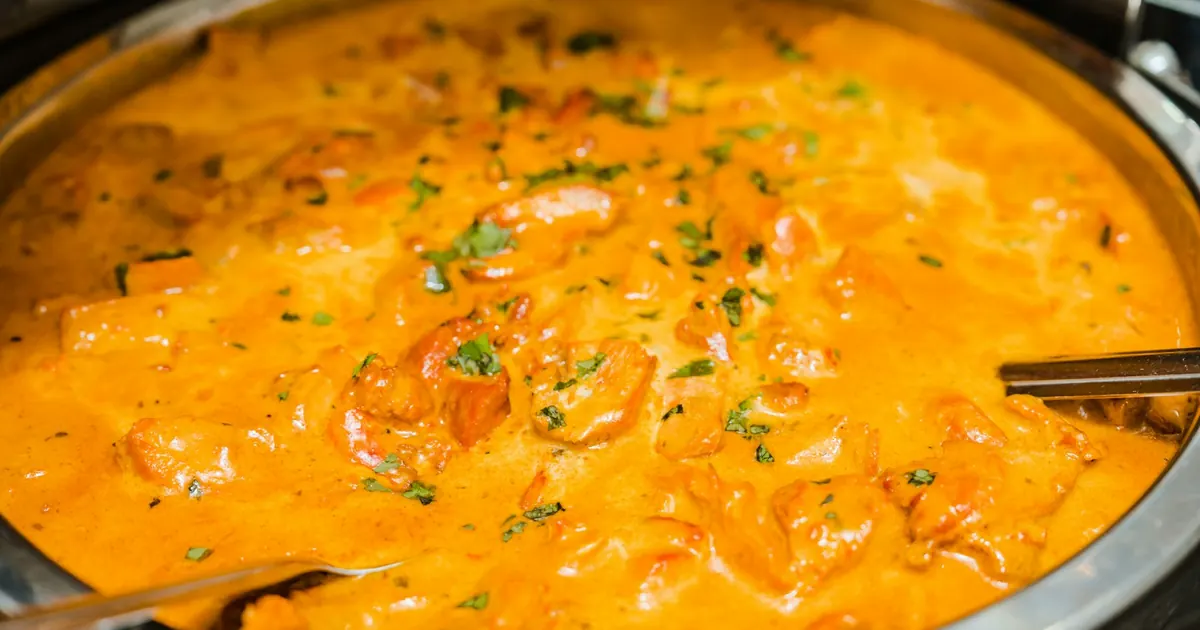
On UK takeaway menus, chicken korma commonly means boneless chicken in a smooth, rich sauce made with cream, yoghurt, ground almonds, coconut or a combination of these. The result is often mildly spiced and noticeably sweet compared with a tomato-led curry. Individual kitchens choose different balances, so neither almonds nor coconut should be treated as universal ingredients.
This makes the menu name a useful starting point, not a complete ingredient description. A traditional braised version may be more savoury, with pronounced onion and whole-spice flavours, while a restaurant-style sauce may prioritise softness and richness. Both can carry aromatic spice without delivering much chilli heat.
Common Ingredients
Recipes vary by restaurant; these are typical ingredients, not a guarantee of what any takeaway uses.
Main ingredients
- Chicken
- Onions
- Ginger and garlic
Typical sauces
- Yoghurt or cream
- Ground almond or cashew paste, sometimes
- Coconut milk or coconut powder, sometimes
Common spices and seasonings
- Cardamom
- Cinnamon
- Coriander
- Cumin
- Garam masala
Garnishes
- Flaked almonds, sometimes
- Fresh coriander
- Cream, sometimes
Possible allergens
- Milk
- Nuts (e.g. almonds, cashews)
Taste and Flavour
The familiar UK takeaway korma is soft and rounded, with creaminess cushioning the spices rather than removing them. Cardamom can bring a floral note, cinnamon a gentle warmth, and ground nuts a slightly grainy richness beneath an otherwise smooth sauce. Coconut, where used, adds its own sweetness and aroma.
A more onion-led or yoghurt-based preparation may taste savoury and faintly tangy instead. Mild should describe the chilli level, not an absence of seasoning: a well-balanced korma can be fragrant without feeling hot. Added sugar and the richness of dairy also differ between kitchens, so sweetness is not a fixed defining measure.
Korma and tikka masala: what changes?
The usual takeaway contrast is a creamy, nutty korma against a more tomato-led tikka masala. Tikka masala also normally starts with marinated, separately cooked chicken tikka; korma chicken may cook within the sauce or be combined with a prepared sauce during service.
There is overlap because both can contain cream, yoghurt and nuts. Korma is often the gentler option, but do not assume every masala is hot or every korma is coconut-based. When browsing local takeaway menus on Eatin, compare the descriptions and ask about ingredients if the sauce style matters more to you than its name.
Popular Variations
A yoghurt-led chicken korma can have more tang and less obvious sweetness than a cream-heavy takeaway version. Slow-braised preparations may use browned onions and whole spices for depth, while some restaurant versions rely on a smooth ground-nut sauce. Coconut-rich versions are another possibility, rather than the definition of the dish.
Chicken tikka korma combines separately marinated chicken with a korma-style sauce, adding another layer of seasoning. Lamb or vegetable korma may also appear on menus, but a change of main ingredient does not guarantee a change in the sauce. Vegetable versions can still contain dairy, nuts or meat-based stock.
What Goes Well With This Dish?
Plain rice is a useful counterweight to a rich korma, keeping the meal from becoming uniformly creamy. Garlic naan adds a savoury edge, and its soft centre can pick up the sauce left around the chicken.
For contrast, try a crisp onion bhaji or a fresh tomato and cucumber salad. Sweet stuffed breads can make the overall meal sweeter still, so choose them deliberately rather than assuming every naan provides the same balance.
Allergens and Dietary Information
Milk is likely where cream, yoghurt, butter or ghee is used. Ground almonds and cashews can be blended into the sauce even when no nuts are visible on top. Coconut is separate from the UK regulated tree-nut category, though individual allergies still require care. A nut-free request needs a conversation about the sauce base and shared preparation, not simply omitted almond garnish.
Ingredients and allergens can vary between restaurants. Always check directly with the takeaway before ordering if you have a food allergy or specific dietary requirement.
Find Chicken Korma at Takeaways Near You
Enter your postcode to see takeaways on Eatin whose menus list chicken korma.
Frequently Asked Questions
Can I order a korma without nuts?
Ask the takeaway before ordering. Nuts may already be blended into its prepared sauce, so leaving off flaked almonds is not enough. Whether an alternative can be made safely depends on the kitchen’s ingredients and handling practices.
Is korma suitable for someone who dislikes chilli?
It is often a useful starting point because UK takeaway versions are usually mild. However, mild does not mean chilli-free. Ask whether chilli is present in the sauce or chicken preparation if even a little heat is unwelcome.
What related curry should I try next?
Chicken tikka masala offers another sauced chicken dish, often with more tomato tang. Lamb rogan josh usually brings a more savoury spice profile. Neither is a guaranteed step up in heat, so compare the takeaway’s own descriptions.
Content last reviewed 10 November 2026.