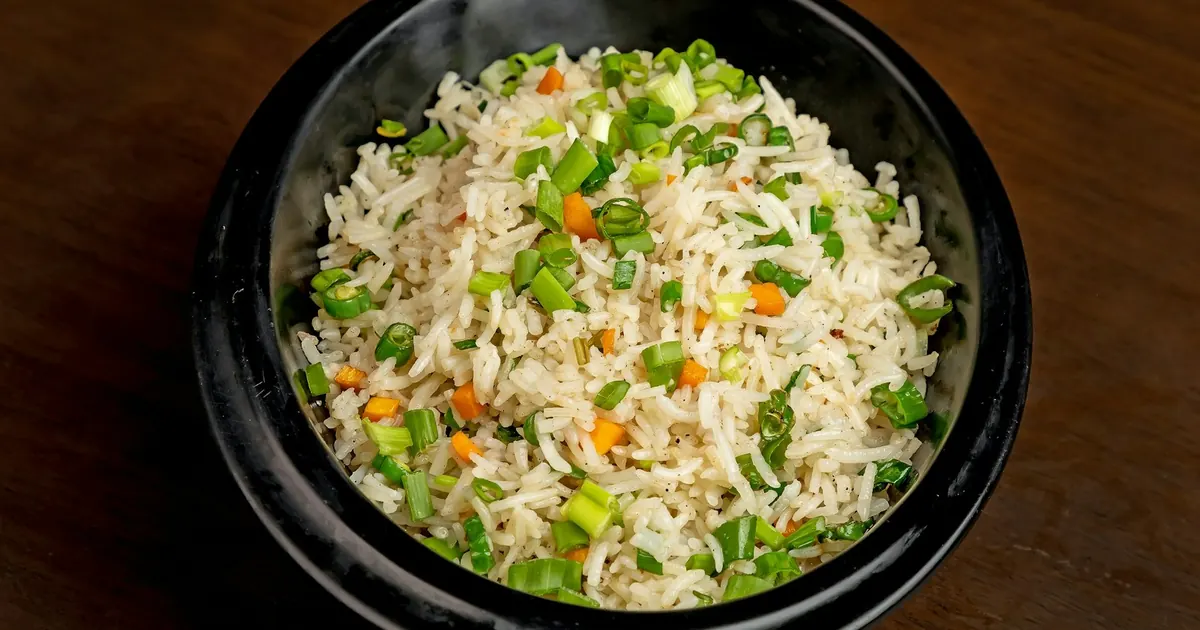
About Egg Fried Rice
The core ingredients of egg fried rice are straightforward: cooked rice, egg and a little oil. Beyond that, a takeaway may add salt, soy sauce, spring onion, peas or other vegetables. Long-grain rice is common, but the precise variety is not fixed by the name.
Cooked rice is stirred and tossed in a hot wok or pan, with egg either scrambled separately within the pan or worked through the grains. Different sequences produce different results: visible pieces of egg in one version, a finer coating in another. The objective is generally to separate the grains rather than create a wet rice mixture.
Previously cooked, properly chilled rice is often useful because its surface is drier, but that does not mean rice should be left standing at room temperature. Safe cooling and storage are essential. For takeaway customers, the practical distinction is texture: good separation, tender grains and egg distributed through the portion. Colour alone cannot tell you whether soy sauce has been used or how strongly the rice is seasoned.
Common Ingredients
Recipes vary by restaurant; these are typical ingredients, not a guarantee of what any takeaway uses.
Main ingredients
- Cooked rice
- Egg
- Cooking oil
- Peas in some versions
Typical sauces
- Soy sauce, optional
Common spices and seasonings
- Salt
- White pepper, optional
Garnishes
- Spring onion, optional
Possible allergens
- Egg
- Soya
- Cereals containing gluten (wheat)
- Sesame
Taste and Flavour
Egg adds a mellow richness, while fried rice grains can develop lightly toasted edges. The overall flavour is usually restrained enough to sit beside stronger sauces, although salt and soy levels differ between takeaways. Spring onion offers a fresh savoury note and peas can bring small bursts of sweetness.
A pale version may be seasoned mainly with salt; a darker one may use soy sauce. Neither colour guarantees a particular taste. Sesame oil, where used, adds a distinct aroma, but chilli is not normally central to a plain egg fried rice.
Egg fried rice versus boiled rice
Boiled or steamed rice is cooked with water and usually served without the added egg and frying stage. Its relatively neutral flavour makes it useful for soaking up rich sauces. Egg fried rice adds egg, cooking oil and whatever seasonings the kitchen chooses.
The difference is therefore more than colour or presentation. Fried rice often has more distinct, lightly coated grains and a fuller savoury taste. Neither name tells you the exact portion size or nutrition. Choose plain rice when you want a simpler base, or egg fried rice when the accompaniment should contribute flavour of its own.
Popular Variations
- Simple egg fried rice: rice and egg with restrained seasoning, sometimes finished with spring onion.
- Vegetable additions: peas, carrots, sweetcorn or other chopped vegetables may appear, even when the menu gives no detailed list.
- Soy-seasoned versions: soy sauce contributes colour and savouriness, but is not required in every preparation.
- Special fried rice: commonly adds a mixture of meats or seafood and is a separate dish rather than another name for plain egg fried rice.
Chicken, prawn and mushroom fried rice also appear on takeaway menus. They may still contain egg, so changing the main addition does not necessarily remove it.
What Goes Well With This Dish?
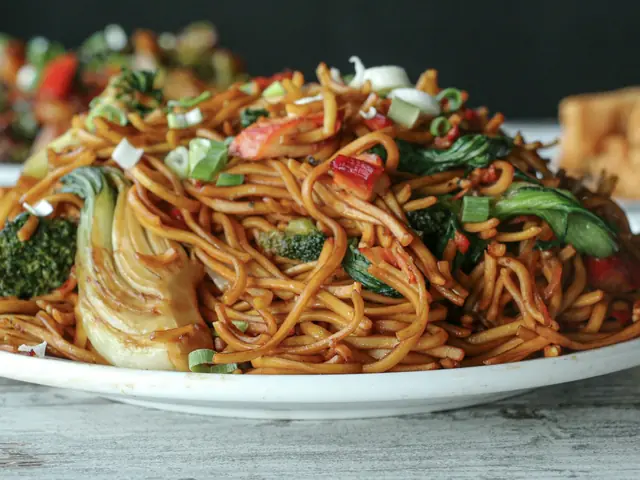
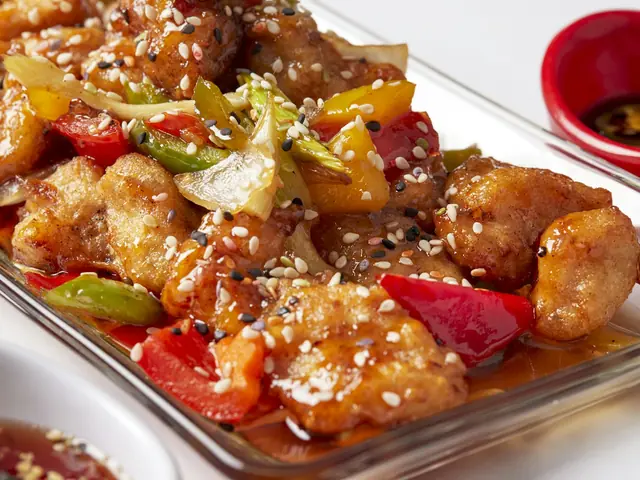
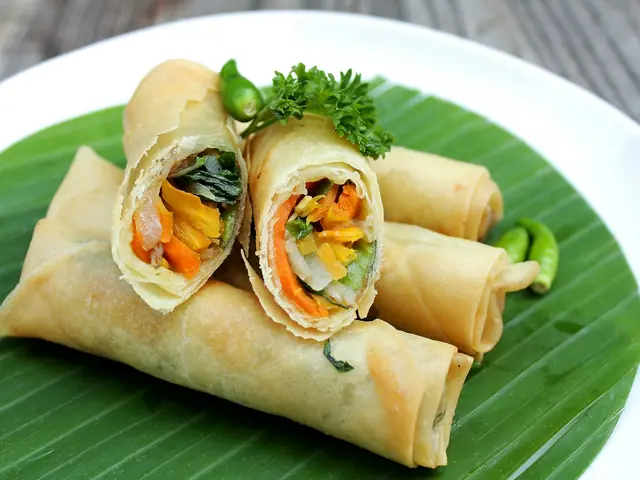
Sweet and sour chicken works well with egg fried rice because the savoury grains temper the sauce's sweetness. It can also accompany other sauced meat or vegetable dishes without competing too strongly. In a shared Chinese takeaway order, spring rolls add a crisp contrast. If chicken chow mein is already on the table, a smaller shared rice portion may be enough; there is no need to order both for everyone.
Allergens and Dietary Information
Egg is a core ingredient. Soya and wheat may be present through soy sauce, and sesame can appear as finishing oil. A meat-free description does not establish vegetarian suitability if stock, animal fat or shared cooking equipment is involved. Explain any allergy directly and ask about sauces, cooking fat and wok use as well as the rice itself.
Ingredients and allergens can vary between restaurants. Always check directly with the takeaway before ordering if you have a food allergy or specific dietary requirement.
Find Egg Fried Rice at Takeaways Near You
Enter your postcode to see takeaways on Eatin whose menus list egg fried rice.
Frequently Asked Questions
Is egg fried rice vegetarian?
It often can be, but the name only confirms rice and egg, not every seasoning or cooking fat. Ask whether meat stock, animal fat or meat-based sauces are used, and discuss shared equipment if relevant to your requirements.
Does egg fried rice contain soy sauce?
Some versions do and others rely mainly on salt or other seasoning. You cannot reliably identify all sauce ingredients from the colour. Ask the kitchen specifically about soya and wheat if either needs to be avoided.
How should I handle leftover takeaway rice?
Eat it promptly and do not leave it sitting warm for long periods. Rice needs rapid cooling and refrigerated storage if kept. Follow current UK food safety advice for storage and reheating, and discard it if its handling history is uncertain.
Content last reviewed 10 November 2026.